

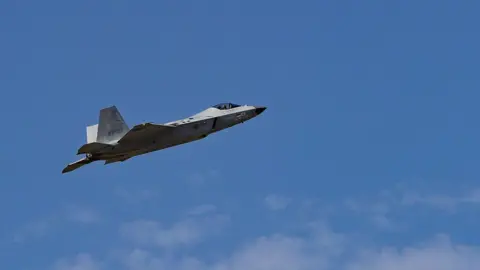
The Republic of Korea has lodged a complaint with the Chinese and Russian defence attaches based in the country, a day after their military aircraft flew into its air identification zone.
South Korean authorities stated it scrambled combat aircraft to "implement responsive actions in preparation for any emergencies" after two Chinese and seven Russian warplanes "flew into the zone on Tuesday, but noted they "did not violate" the nation's airspace.
A number of states define air identification defence zones, where they demand foreign planes to declare their presence. Such zones are not part of national air territory under global legal frameworks.
Details of the Aerial Encounter
The Russian planes flew into the Korean ADIZ near Dokdo and Ulleung Island, while the Chinese planes approached near the Ieodo area, a military official said.
Both sides' aircraft then converged in the sky near Japan's Tsushima Island, the official noted.
"South Korean forces will take firm action against aircraft activities from neighbouring countries in the Kadiz in compliance with established global norms," South Korea's defence ministry declared.
Underlying Sovereignty Disputes
Japan alongside South Korea have asserted sovereignty over the Dokdo islets, as has North Korea.
Ieodo - a underwater reef above the South Korean island of Jeju - is a subject of contention between Seoul and Beijing, both of which have included it in their air defence zones.
China and Russia's Response
China on Wednesday stated that its military aviation had carried out a joint patrol with Russia in the Western Pacific and East China Sea region.
The drill was part of an "annual cooperation plan" between Beijing and Moscow to "address regional challenges and uphold peace and security in the region," commented a military spokesperson.
China and Russia have entered the Korean ADIZ without prior notice on a number of times since 2019, frequently amid comparable drills.
Moscow rejects South Korea's ADIZ, characterising it as "independently declared" and saying it should therefore not establish binding rules for other nations.


